
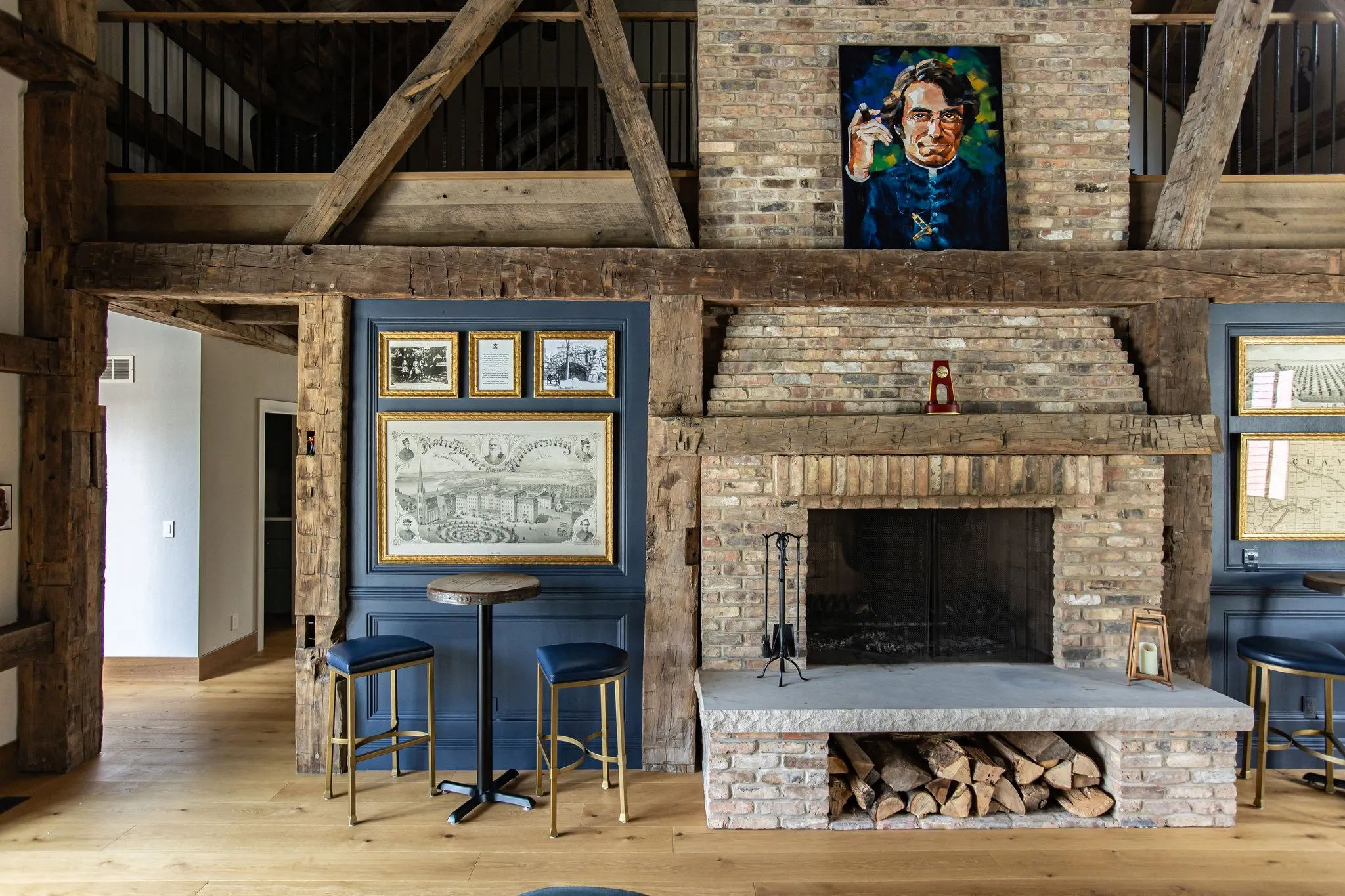
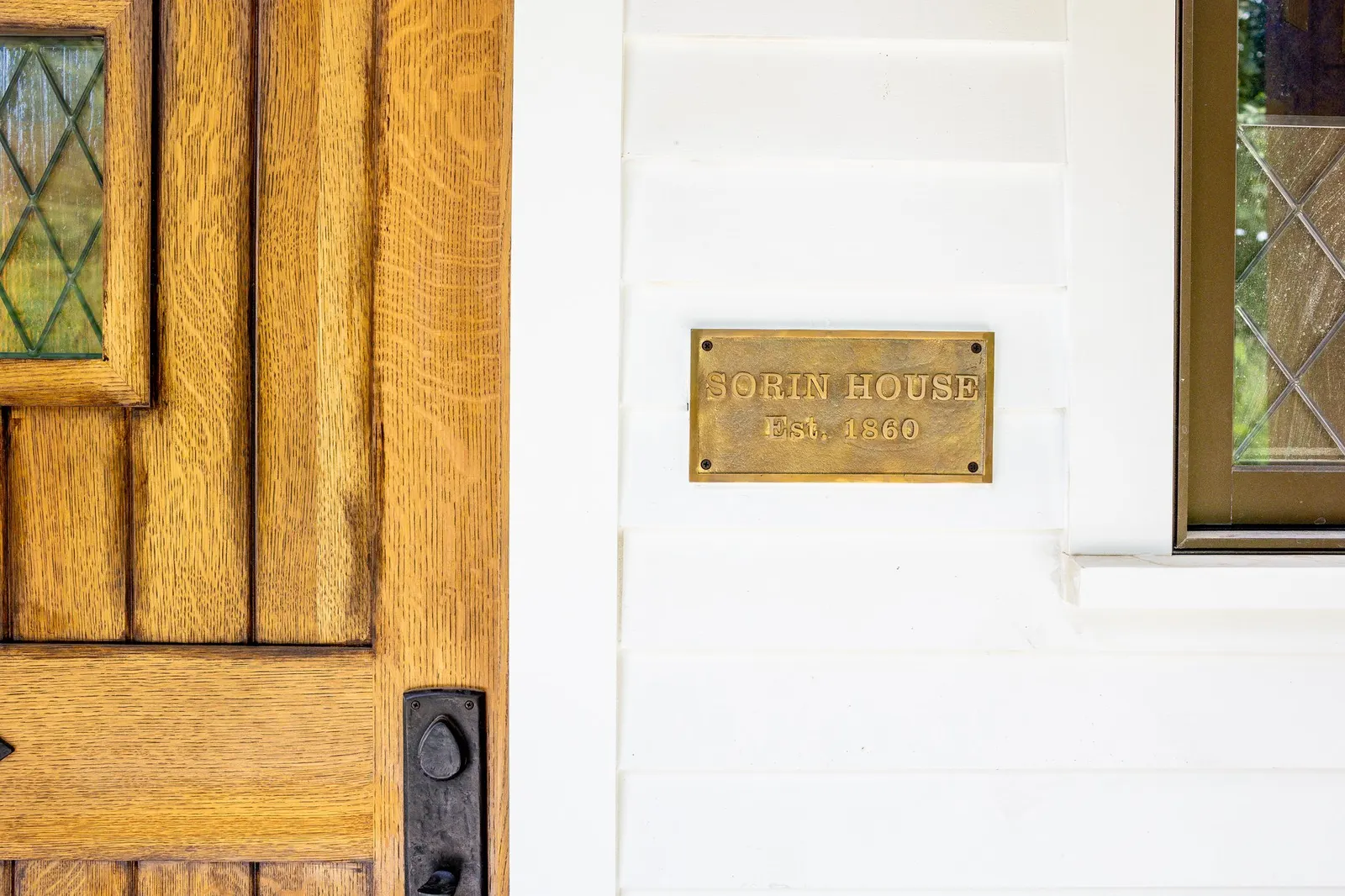
Father Sorin’s farmhouse, rebuilt timber by timber
The main house is built around the farmhouse once owned by Father Edward Sorin, founder of the University of Notre Dame. Its farm later supplied the boulders for the Grotto.
A short history of the house
- 1842
Father Edward Sorin, a 28-year-old priest of the Congregation of Holy Cross, founds the University of Notre Dame.
- Early 1860s
Sorin owns the farmhouse, built on farmland that helped feed the university’s staff and students.
- About 1863
The farmhouse is moved to its present spot, overlooking what is now Juday Creek.
- 1891
Notre Dame sells the farmhouse and land to Peter and Mary Kintz.
- 1896
Boulders from the Kintz farm are hauled to campus to build the Grotto of Our Lady of Lourdes.
- 2020s
A Notre Dame alumnus buys the property to preserve it and rebuilds the farmhouse timber by timber.
Sorin’s farm, north of campus
Father Sorin arrived in northern Indiana in 1842 and founded Notre Dame at 28. He lived on campus, but by the early 1860s he owned this farmhouse and the farmland around it, which helped feed the young university’s staff and students.
The farmhouse was built on Sorin’s farmland and moved to its present location around 1863, to overlook what is now Juday Creek. A historic Clay Township map hangs beside the fireplace, marking the house and the parcel across from it owned by Sorin.
The Kintz family and the Grotto
In 1891 Notre Dame sold the farmhouse and its land to Peter Kintz II and his wife, Mary. Kintz Avenue, just off Juniper Road beside the house, is named for the family. The Kintzes supplied the campus with milk, eggs and meat, and worked for the university to help pay off their loan.
In 1896, while they were still paying it off, Notre Dame built its Grotto of Our Lady of Lourdes from boulders gathered on local farms. The Kintz sons cleared boulders from their fields along Juday Creek and hauled them about a mile to campus. The Grotto was dedicated that August and is still one of the best-loved places on campus.
A granddaughter of Peter Kintz, who became a Holy Cross sister, told the family story in her own words; her quote hangs to the left of the fireplace. Boulders like the ones in the Grotto, found during construction, now line the driveway.
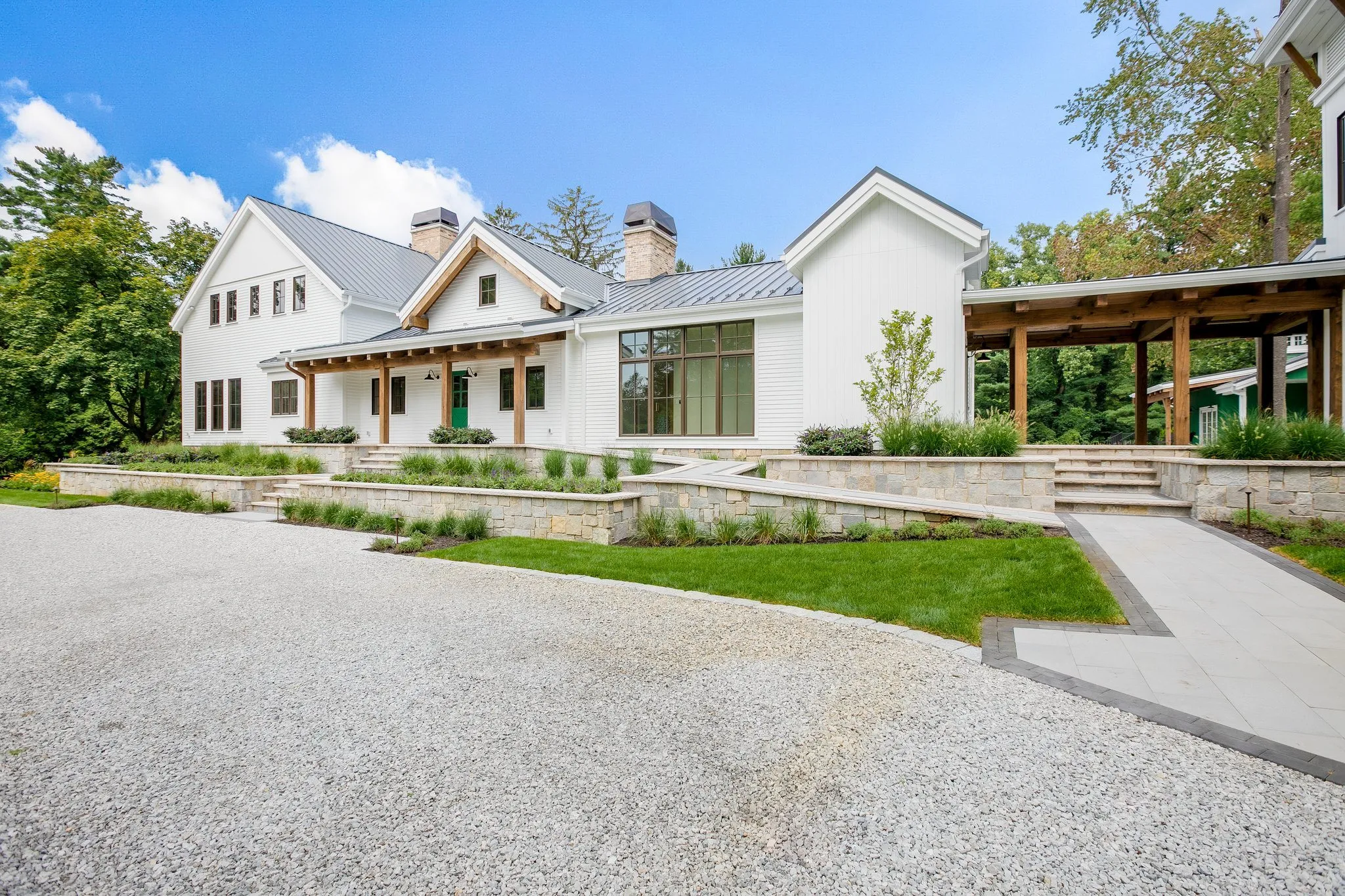
Taken apart, put back together
A Notre Dame alumnus born in Indiana bought the property during the pandemic as a preservation project. Because the house sits in Juday Creek’s flood plain, the work started from the ground up.
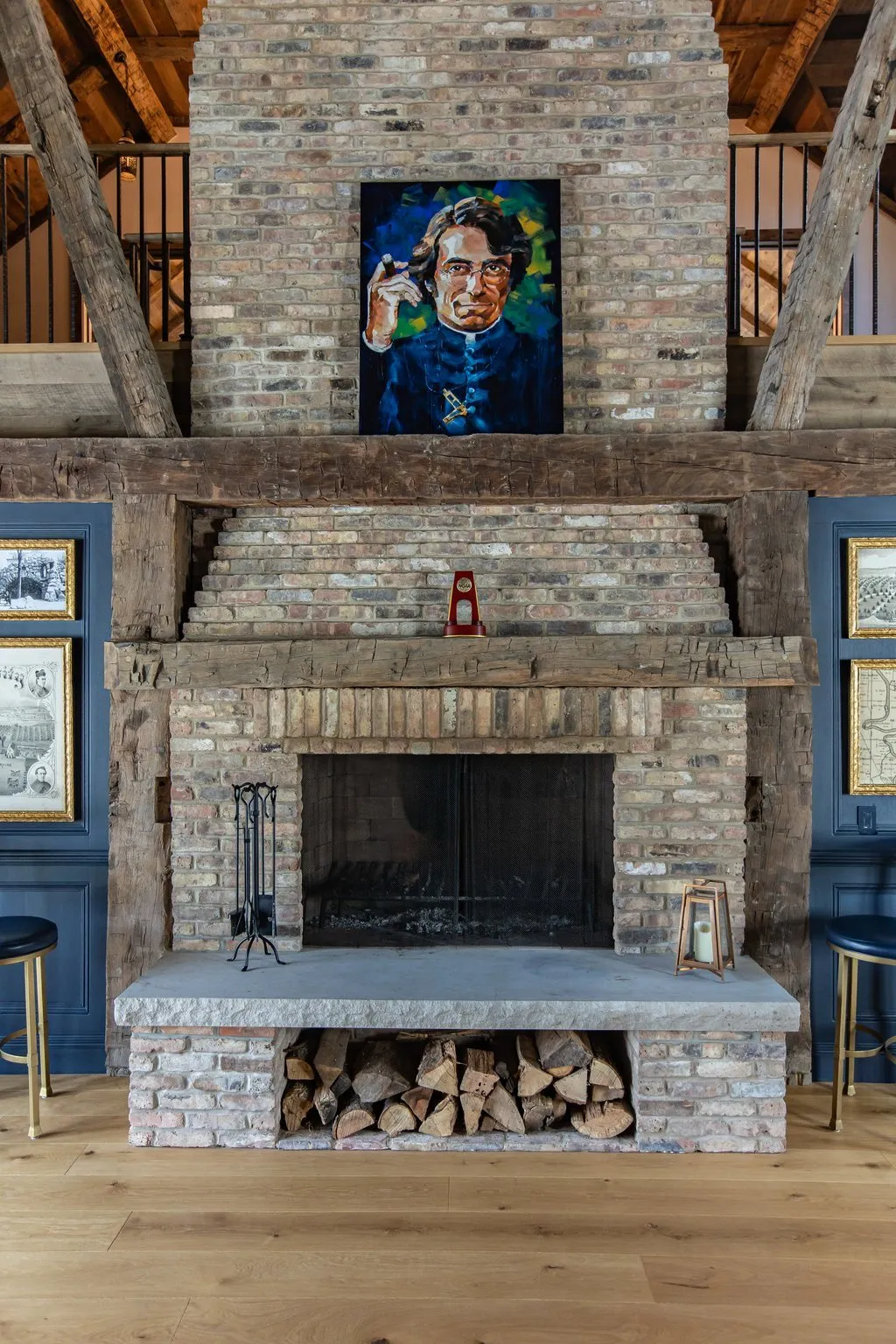
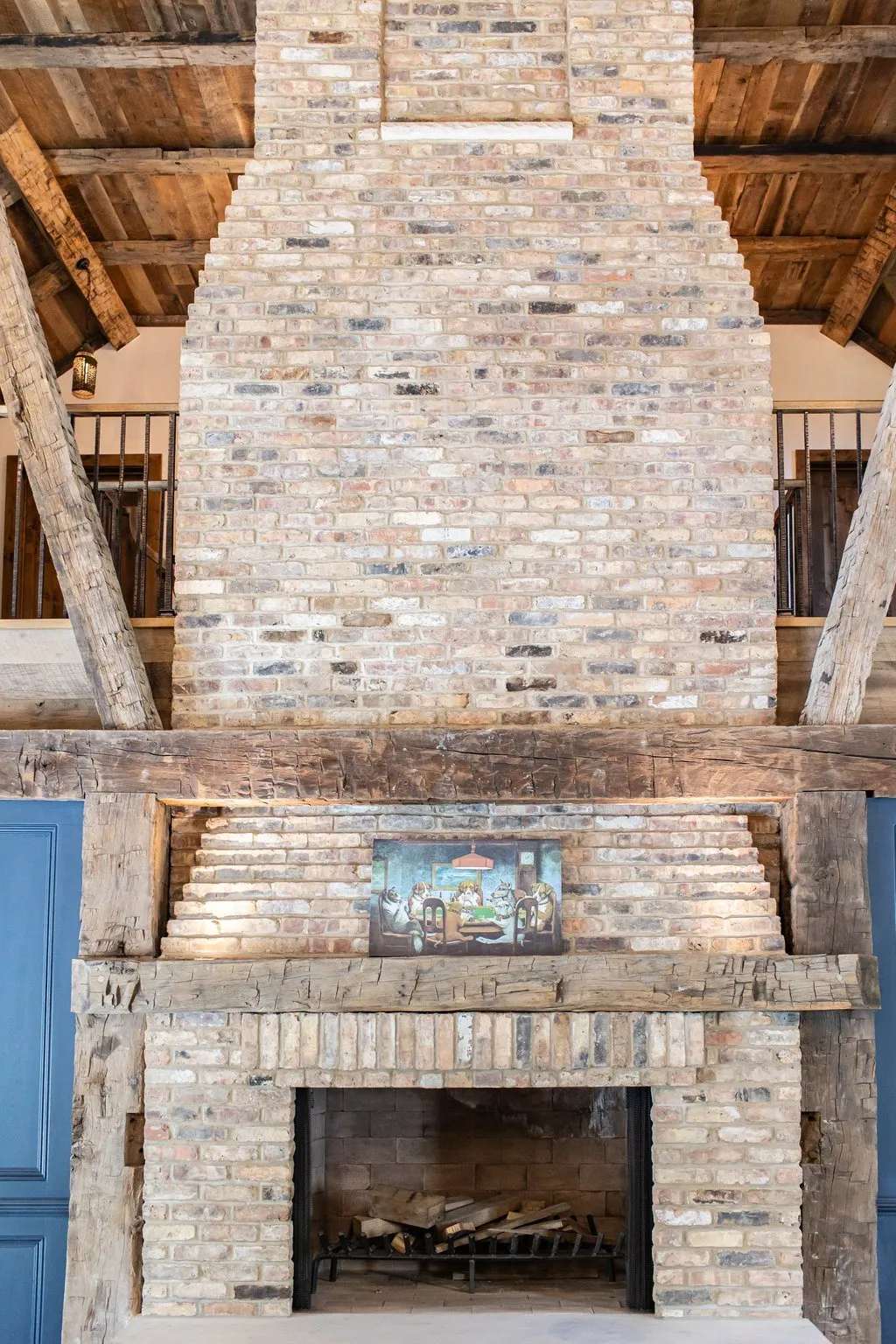
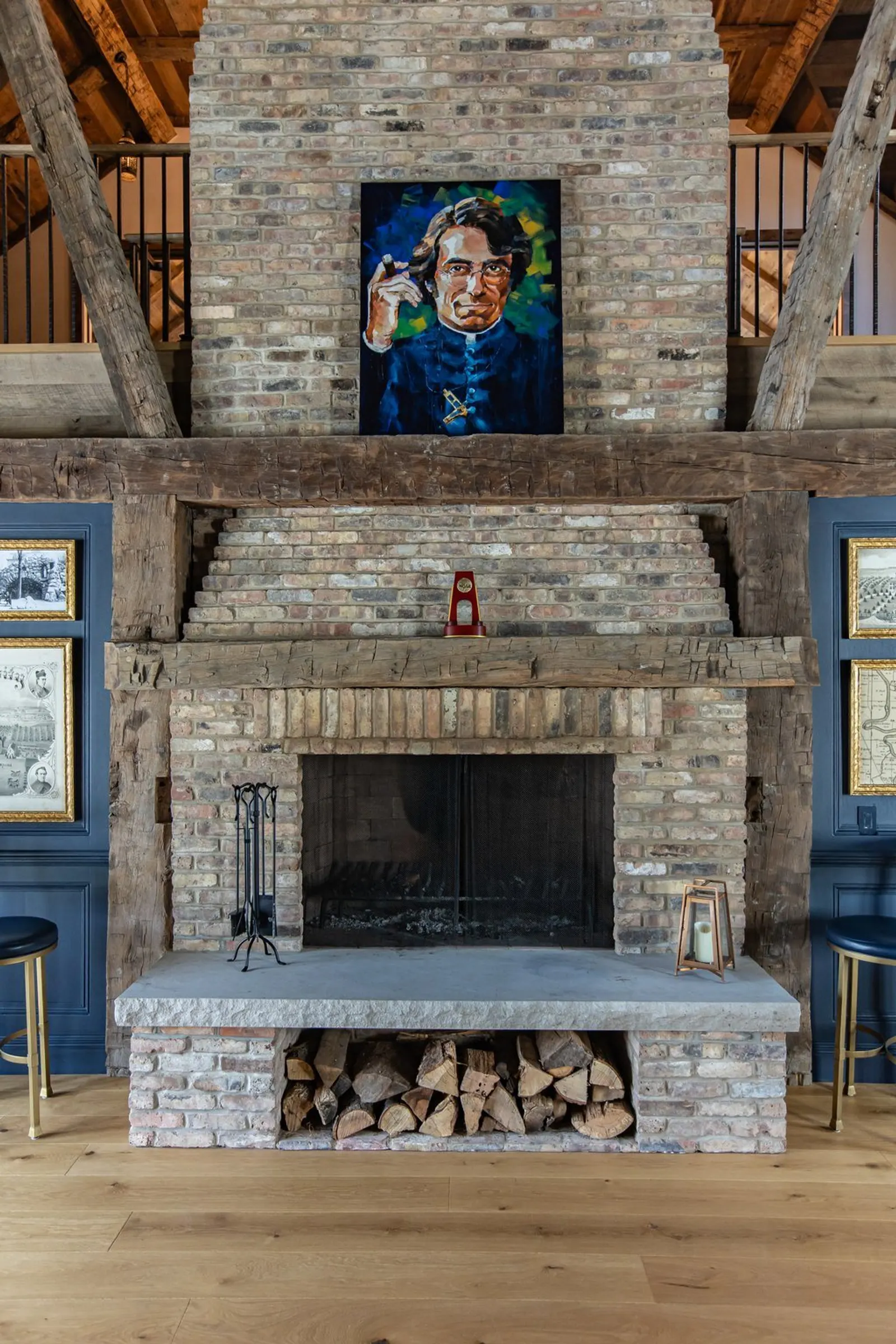
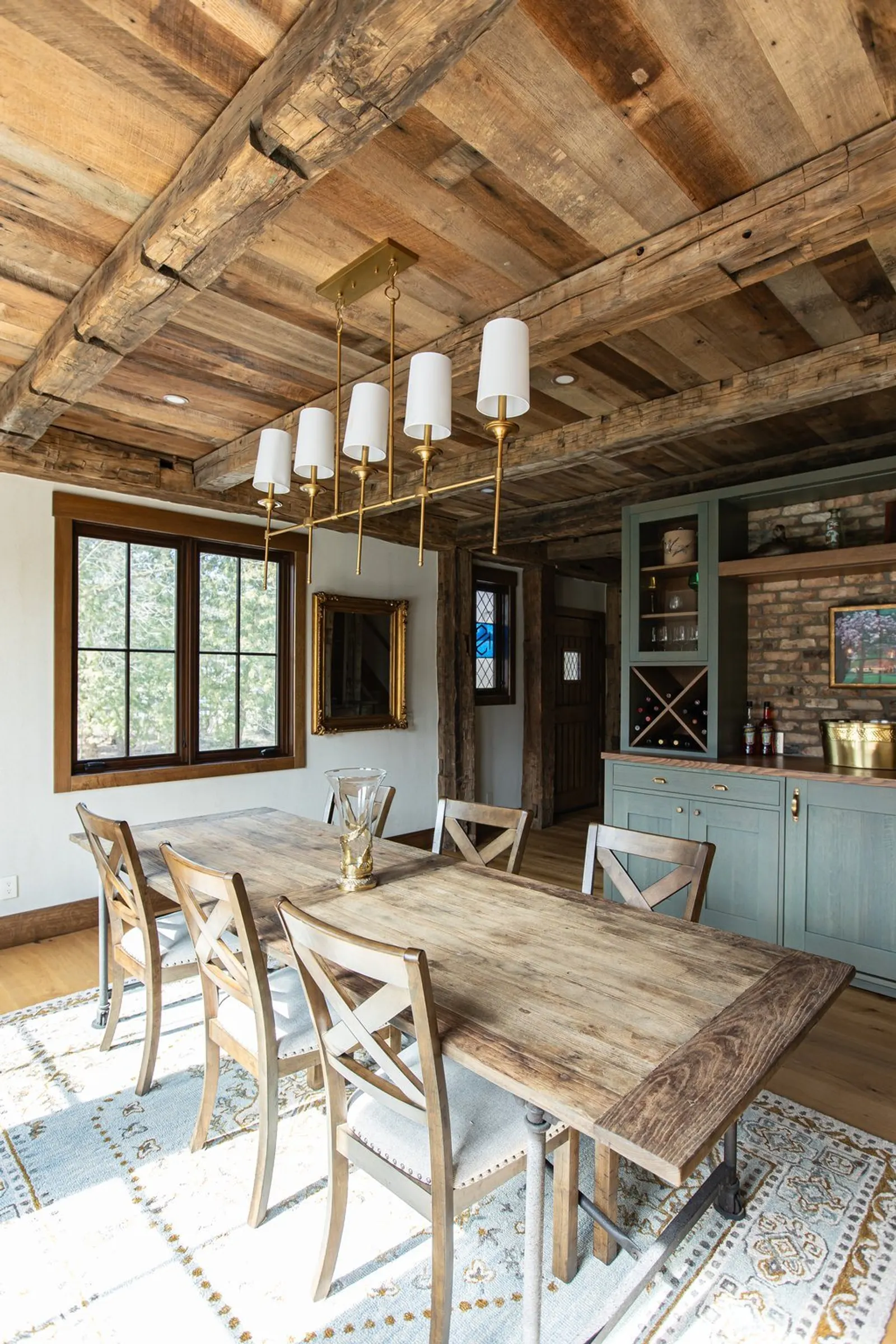
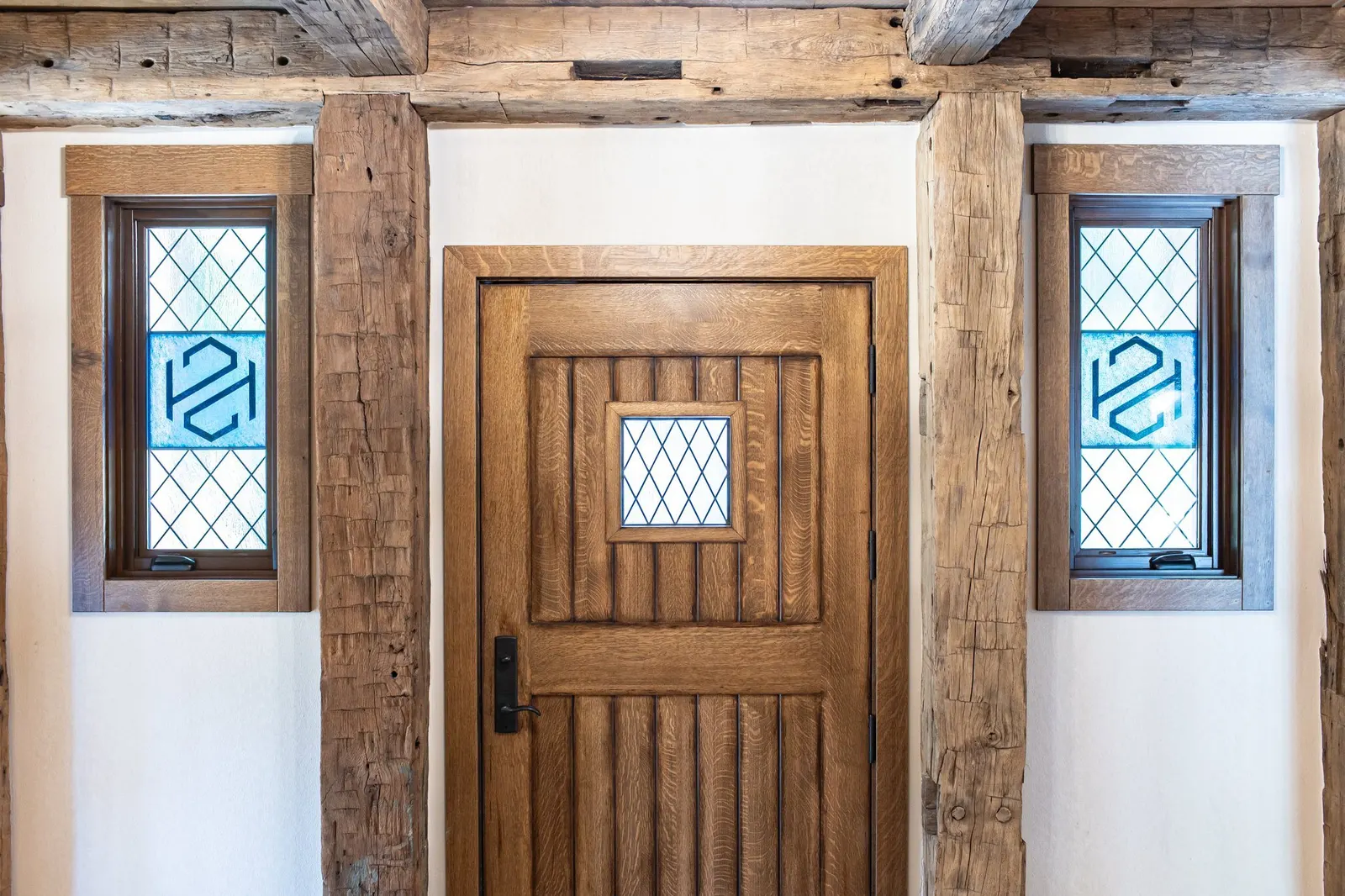
Working with Indiana timber frame architect Bill Tabberson, the team numbered every original timber in the farmhouse, then took the structure apart piece by piece and the clay brick fireplace brick by brick. A new foundation was built six feet above the ground to protect against flooding, and the frame and fireplace were reassembled on top of it in their original design.
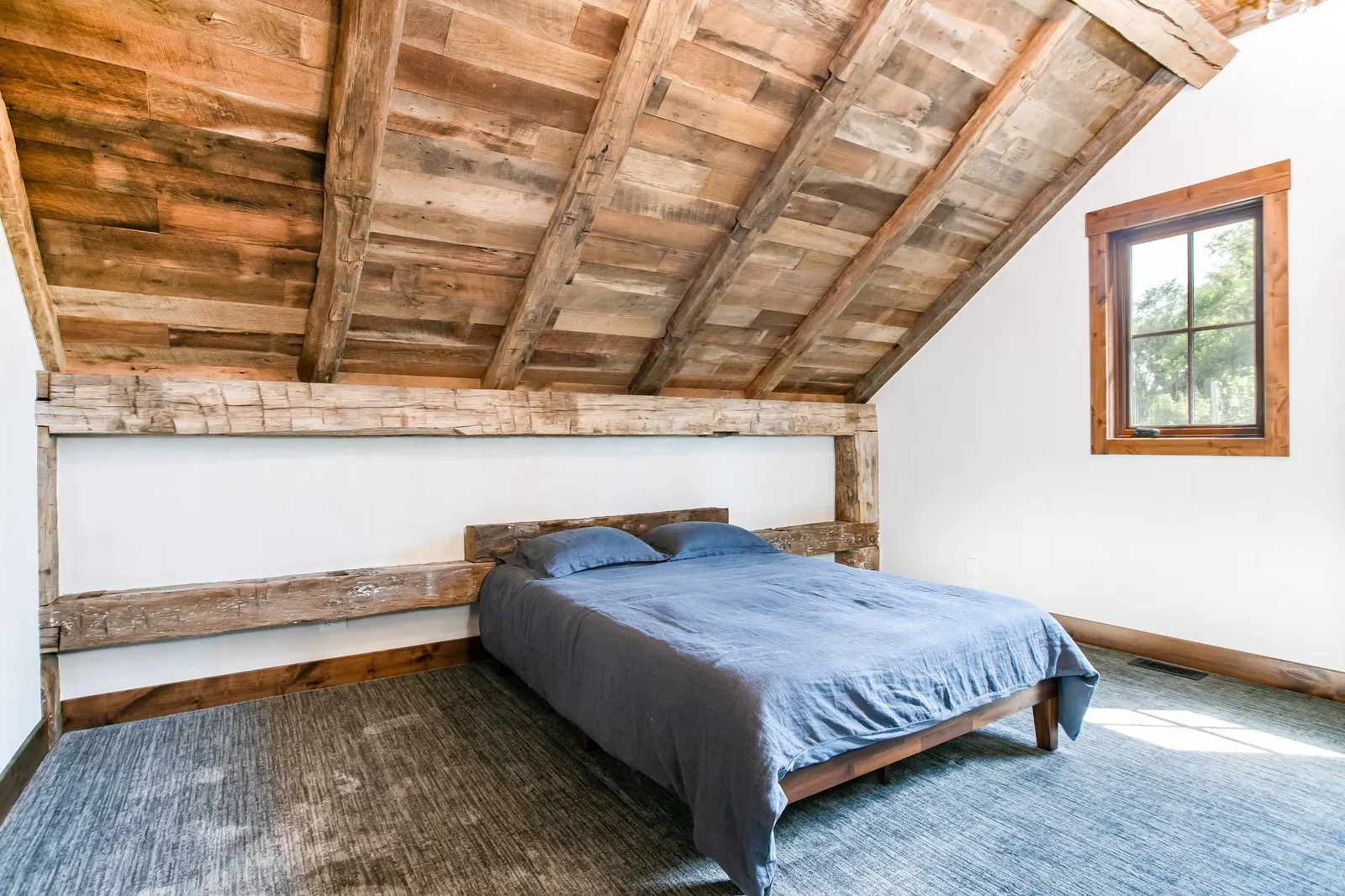
- Boxed-heart white oak timbers, hewn by hand from oak trees on the property
- Wooden peg joinery, a common technique in the 1800s
- About 19,000 linear feet of white oak timber, old and new, across the main house and garage loft
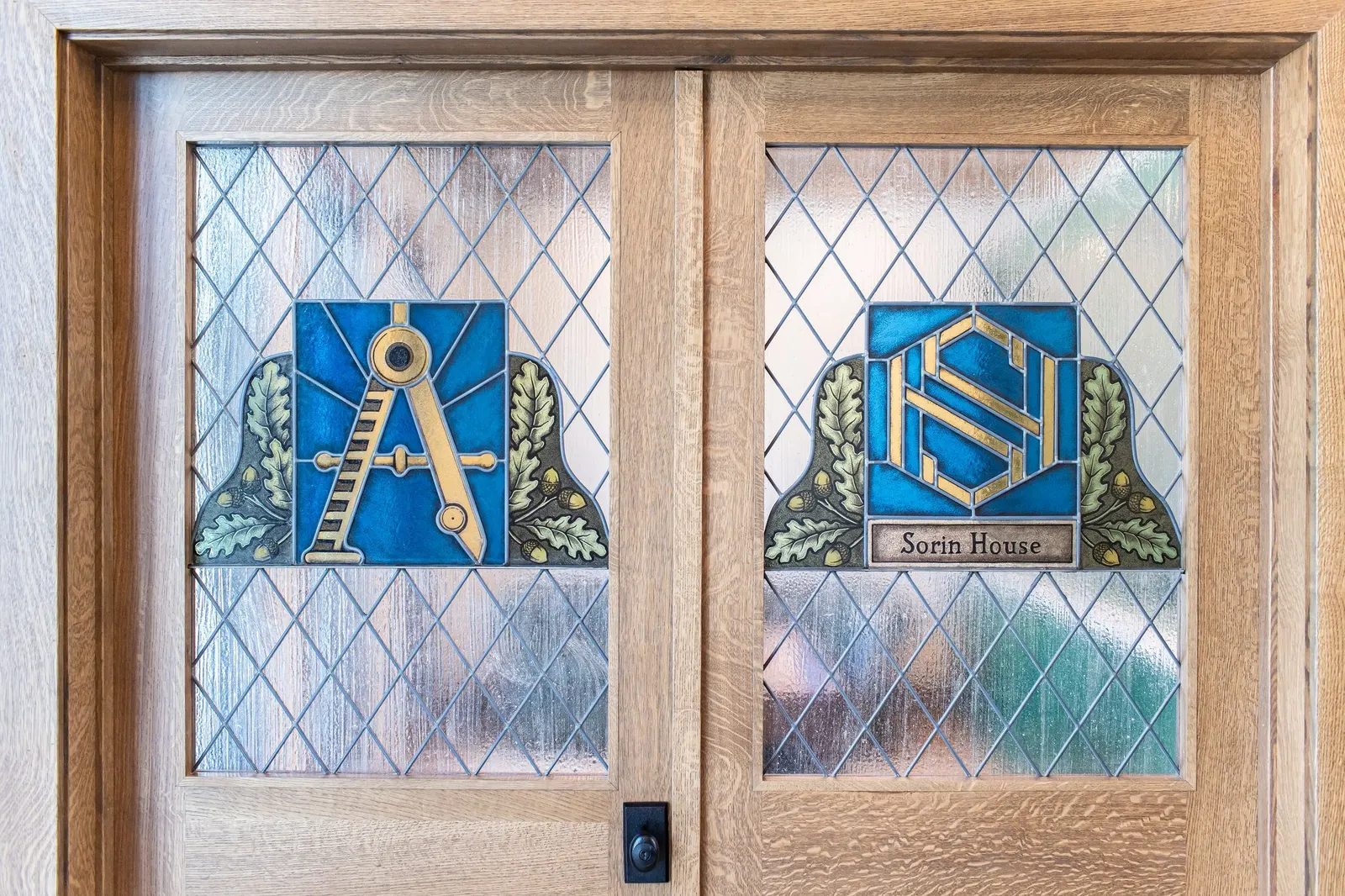
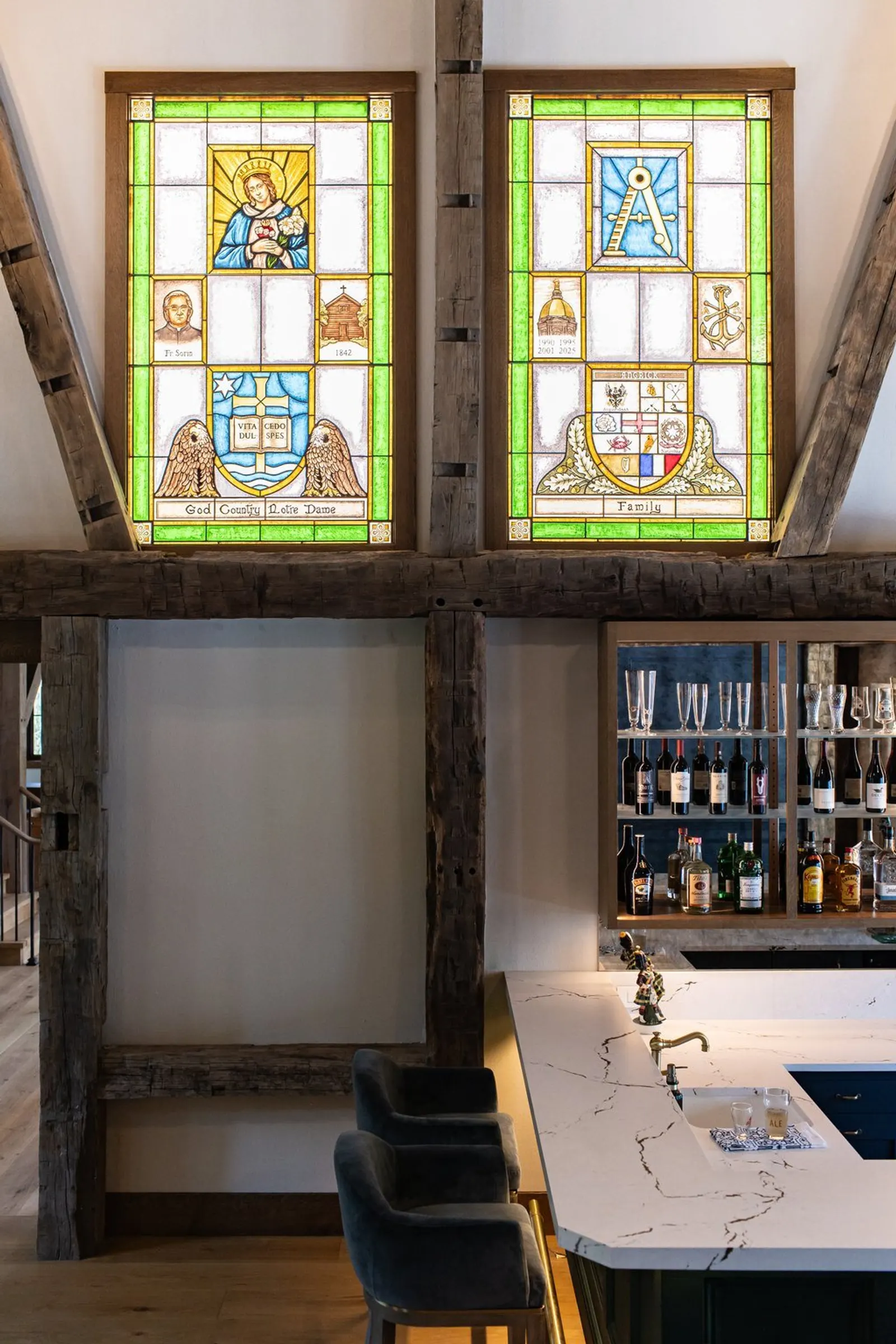
- New stained glass celebrating Notre Dame history and the love of family
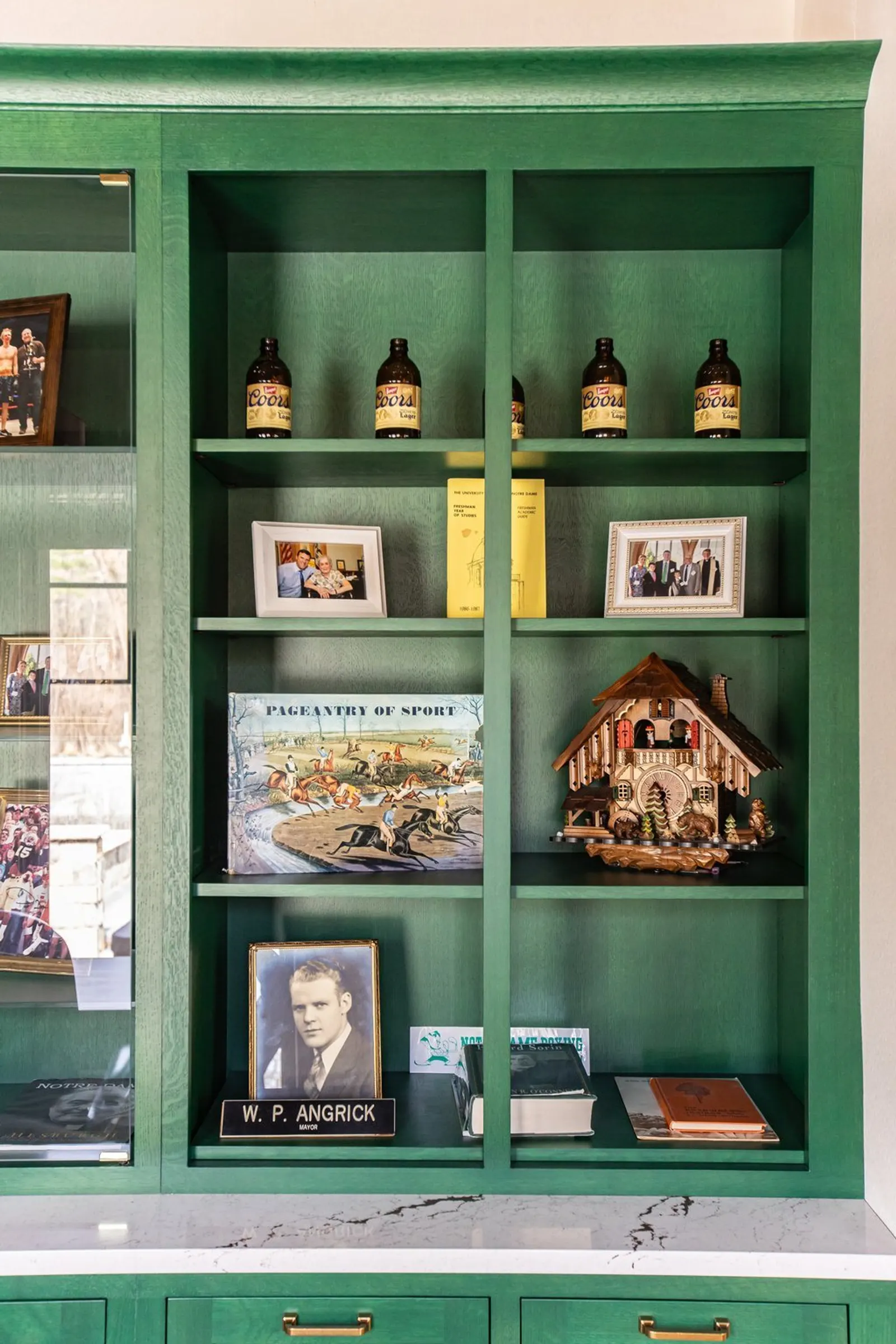
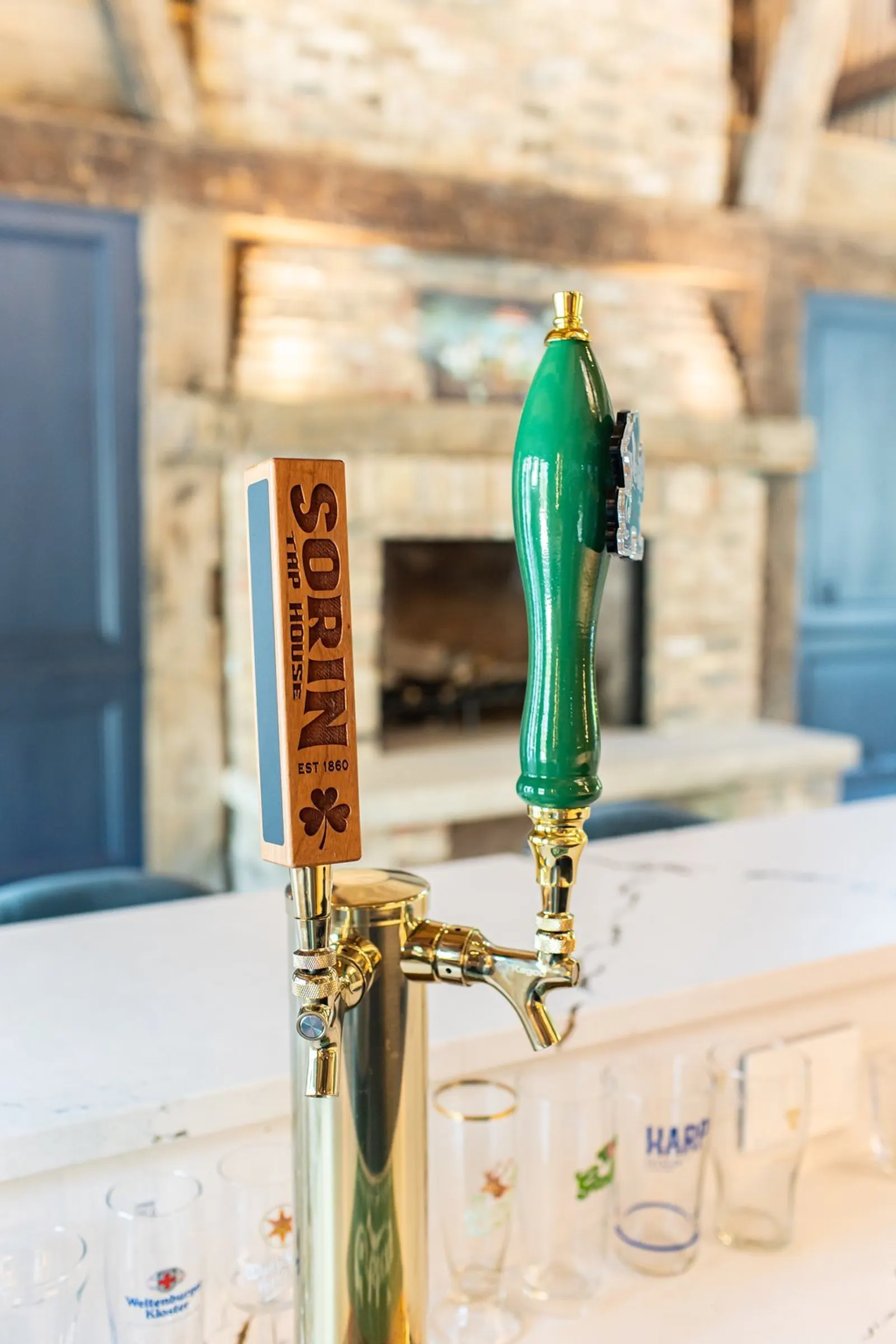
Beautiful property for a gathering. The amenities offer a little something for everyone. The history and nod to Sorin are woven throughout adding a nice touch for fans and out of towners alike. We look forward to retuning next year.
Stay in a piece of Notre Dame history.
Live rates and online booking for the whole estate, or call our local team. 2-night minimum.